The Benefits of Wooden Toys for Child Development: Montessori and Waldorf Approaches
The Benefits of Wooden Toys for Child Development: Montessori and Waldorf Approaches
Benefits of Wooden Toys for Child Development: Montessori and Waldorf Approaches
Childhood is the most important period in which the foundations of an individual's mental, emotional, and social development are laid. Toys used during this period are not only a means of entertainment but also important elements that support learning. Wooden toys, thanks to their natural structure and simple designs, are among the most valuable types of toys supporting child development. This is the main reason why wooden toys are preferred in Montessori and Waldorf educational approaches.
The Place of Wooden Toys in Child Development
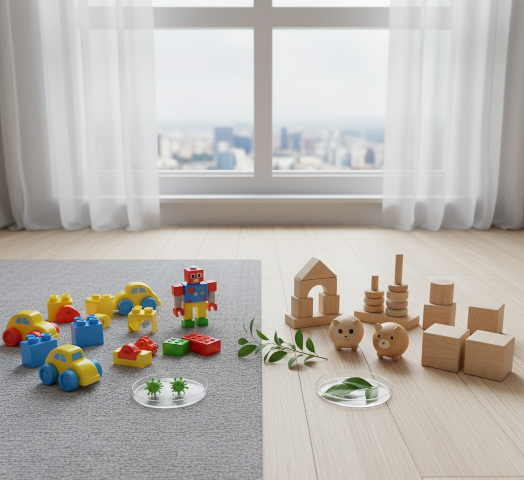
Wooden toys help children get to know and explore their environment. Thanks to their natural textures, they develop the sense of touch and enable the child to establish a healthy connection with their environment. Their chemical-free structure provides a safe play environment. Their simplicity compared to plastic and electronic toys helps children focus their attention on a single point.
Thanks to these features, children are encouraged to think, experiment, and find solutions during play. This directly supports cognitive development.
The Importance of Wooden Toys in the Montessori Approach
Montessori education is based on the principle of children learning at their own pace and acting independently. Therefore, the materials used must be simple, functional, and natural. Wooden toys perfectly align with these fundamental principles of the Montessori approach.
Children learn through trial and error while playing with wooden toys. The fact that a toy serves a single purpose makes it easier for the child to focus their attention and increases their concentration span. This process contributes to the development of hand-eye coordination and strengthens problem-solving skills.
The Role of Naturalness in the Waldorf Approach
The Waldorf educational philosophy prioritizes the child's imagination and creativity. In this approach, it is important that toys are as natural and simple as possible. Because wooden toys do not offer specific patterns, they allow children to create their own play world.
This free play space supports the child's emotional development while also strengthening their creativity. In the Waldorf approach, wooden toys are considered one of the most natural tools for a child to express their inner world.
The Developmental Effects of Wooden Toys
Children who play with wooden toys can maintain their attention for longer periods. Their fine motor skills develop, hand-eye coordination strengthens, and problem-solving abilities increase. At the same time, contact with natural materials fosters environmental awareness and makes children more sensitive to nature.
These toys support a child's imagination while making learning a fun process. In this respect, they are not only a plaything but also an educational developmental tool.
A Natural and Timeless Approach to Play
Thanks to their long-lasting structure, wooden toys can be used for years. Their durability makes them a sustainable and economical choice. Their timeless designs also ensure their enduring appeal in every era.
Toys made from natural materials contribute to children growing up in a healthy environment. In this respect, wooden toys are among the most preferred products by conscious parents.
An Approach Supporting Natural Development
Wooden toys reflect the naturalness, simplicity, and freedom that are common to both Montessori and Waldorf approaches. This approach, which respects the child's developmental process, supports learning as a natural process. Therefore, wooden toys stand out as one of the best choices for contributing to children's mental and emotional development.