The Role of Wooden Toys in Montessori Education and Their Contributions to Child Development
The Role of Wooden Toys in Montessori Education and Their Contributions to Child Development
The Pedagogical Importance of Natural Materials in Montessori Philosophy
The Role of Wooden Toys in Montessori Education and Their Contributions to Child Development: Montessori Education and the Importance of Natural Materials. Montessori education prioritizes children learning, exploring, and experiencing at their own pace. The materials used in this approach are designed to develop children's senses, motor skills, and problem-solving abilities. Wooden toys are perfectly suited to the Montessori philosophy. Being made from natural materials, they are safe for children's health and environmentally friendly.
Why Wooden Toys for Children? Risks of Plastic and Synthetic Products
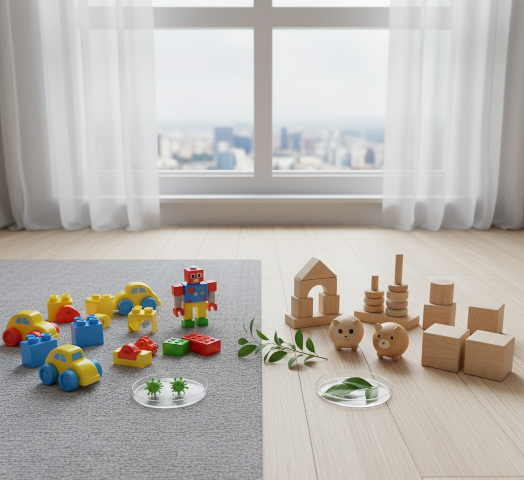
Wood is a safer option for children compared to plastic and synthetic materials. Chemicals like BPA and phthalates used in plastic toys can pose long-term health risks. In Montessori education, natural materials support learning processes and encourage children's sensory development. Wooden blocks, wooden educational toys, and wooden figures are frequently preferred products in Montessori classrooms.
The Contributions of Wooden Toys to Child Development
Wooden toys are designed to develop children's sensory and motor skills. Thanks to their natural texture, children experience play not only visually but also by touching and feeling. This process supports the development of hand-eye coordination and fine motor skills. In the Montessori approach, wooden blocks and shape sets are used to enhance children's problem-solving abilities and creativity. Wooden toys also instill patience and attention in children. Because they are heavier and have a more natural texture than plastic toys, children learn muscle control while manipulating objects.
The Use of Wooden Toys in Montessori Classrooms
Wooden toys used in Montessori classrooms are designed to suit children's learning processes. Each toy aims to develop a specific skill or sensory experience. Wooden blocks, bowls, educational sets, and figures allow children to learn through play. Wooden toys should be minimalist and simple in terms of color and design. This allows children to focus on play and learning without distractions. In Montessori education, it is of great importance that toys are natural and free of toxic substances. Wooden toys meet these criteria, offering a safe and pedagogically effective option.
The Contribution of Wooden Toys to Sensory Development
Wooden toys support children's sensory development. Through touching, grasping, and manipulating, children discover the weight, texture, and shapes of objects. These experiences support children's perceptual and cognitive development. In the Montessori philosophy, sensory education is a fundamental learning approach, and wooden toys are an integral part of this process. Wooden products also support children's imagination and creativity. Wooden figures and shape sets allow children to create their own stories and develop problem-solving skills during play. Unlike plastic toys, wooden toys offer children a more natural and free play space.
Sustainability and Durability
Wooden toys are advantageous not only from a health and pedagogical perspective but also from an environmental one. Their durability and longevity prevent problems such as the rapid breakage or disposal of plastic toys. In the Montessori approach, the quality and sustainability of toys are important. Because wooden toys are made from recyclable and environmentally friendly materials, they offer an economical and ecological solution for both families and educational institutions. Wooden blocks and figures can be used for years and shared by multiple generations.
Choosing the Right Wooden Toys in Montessori Education
There are several criteria to consider when choosing wooden toys in Montessori education. The toys should be non-toxic, made from natural materials, and sized appropriately for the child's developmental level. Wooden blocks, bowls, and educational sets should be offered in a variety of options suitable for different age groups. Wooden toys should support children's learning process while also being mechanically and aesthetically safe. Choosing the right toys maximizes children's exploration, learning, and problem-solving skills. In Montessori education, natural and durable wooden toys provide children with a safe, creative, and educational play experience.